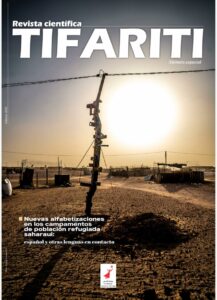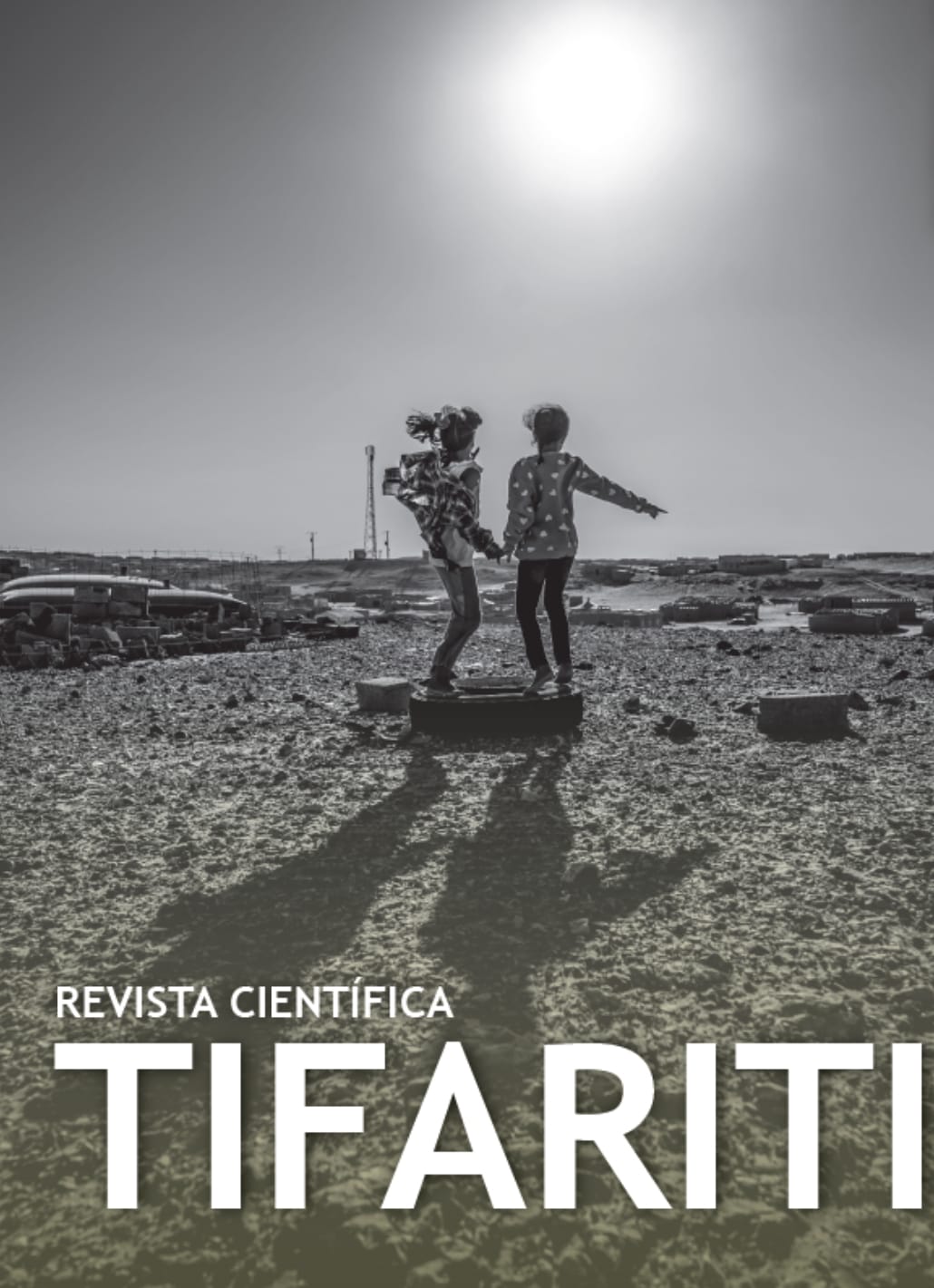
Tifariti No. 3 – Research Centre of the University of Tifariti
We welcome interdisciplinary contributions, including original research papers, essays, and book reviews, on the topic of Western Sahara. We particularly encourage submissions by Sahrawi scholars, artists, activists, and community-based researchers. We also invite contributions that experiment with decolonial, collaborative, and practice-based research, as well as alternative forms of knowledge production thereby challenging common narratives and frameworks.
Contributions may engage with one of the two thematic sections outlined for the journal, submissions, however, are not restricted to these themes
- Western Sahara: Undoing Colonial Narratives
The history and present of Western Sahara have long been predominantly narrated by Western voices through colonial, geopolitical, and hegemonic frameworks that marginalize Sahrawi perspectives and lived experiences. Dominant representations continue to frame the region through Eurocentric, state-centered, and strategic lenses, often obscuring local histories, epistemologies, and political claims.
This call invites contributions that critically engage with and unsettle colonial narratives surrounding Western Sahara, challenge established historiographies, and explore alternative ways of knowing, remembering, and imagining the region.
Possible topics include (but are not limited to):
- Decolonizing historiographies of Western Sahara
- Colonial archives, memory, and silences
- Sahrawi oral histories and localknowledge systems
- Colonial continuities in the representation of Western Sahara in media, art, and activism
- Present-Day Realities and Imagined Futures
Recent political developments, including the UN Resolution of 2025, mark a significant shift in the international framing of the Western Sahara conflict. Increasing diplomatic pressure to accept autonomy under Moroccan sovereignty as a “realistic” solution has intensified, further narrowing the political horizon of self-determination. These developments risk consolidating colonial continuities by foreclosing Sahrawi aspirations for independence and reframing occupation as pragmatic governance.
At the same time, Sahrawi people and communities continue to articulate alternative political visions grounded in self-determination, sovereignty, and decolonial futures. Across occupied territories, refugee camps, and the diaspora, everyday life is shaped not only by political marginalization and uncertainty, but also by practices of resistance, imagination, and future-making that challenge imposed solutions.
This call invites contributions that critically engage with the present-day realities of Western Sahara and the Sahrawi people in the light of these political shifts, while foregrounding Sahrawi imaginaries of self-determination and independence. We seek work that examines how futures are imagined, negotiated, and produced under conditions of prolonged uncertainty, and that interrogates the power relations embedded in international diplomacy and humanitarian governance.
Possible topics include (but are not limited to):
- The political implications of the UN Resolution 2025
- Autonomy as a postcolonial governance framework
- International diplomacy, political realism, and the erosion of self-determination
- Sahrawi responses to shifting global narratives
- Refugee camps as spaces of political imagination and futurity
- Sahrawi visions of independence, sovereignty, and freedom
- Environmental realities and ecological futures
- Utopian imaginaries, speculation, and decolonial futurisms
- Art, culture, and storytelling as future-oriented political practice
- Youth, activism, education, and intergenerational future-making
- Humanitarian regimes and their impact on future horizons
- Art, literature, music, and film as sites of political imagination
Submission Guidelines
Please submit an abstract of 300–400 words, including a brief biographical note. Contributions should clearly outline the research question, methodology, and relevance to the chosen thematic section.Contributions are accepted in Arabic, Spanish, and English.
- Abstract submission deadline: 28 February
- Notification of acceptance: 15 March
- Full paper submission deadline: 30 May
- Double-blind peer review process: June–August
- Publication date: October
Abstracts should be sent to: revista_cientifica@utifariti.org